Why Pigment Position Matters in Ceramic Tableware
A clear look at overglaze and underglaze decoration, firing, glaze protection and the questions buyers should ask before choosing tableware.
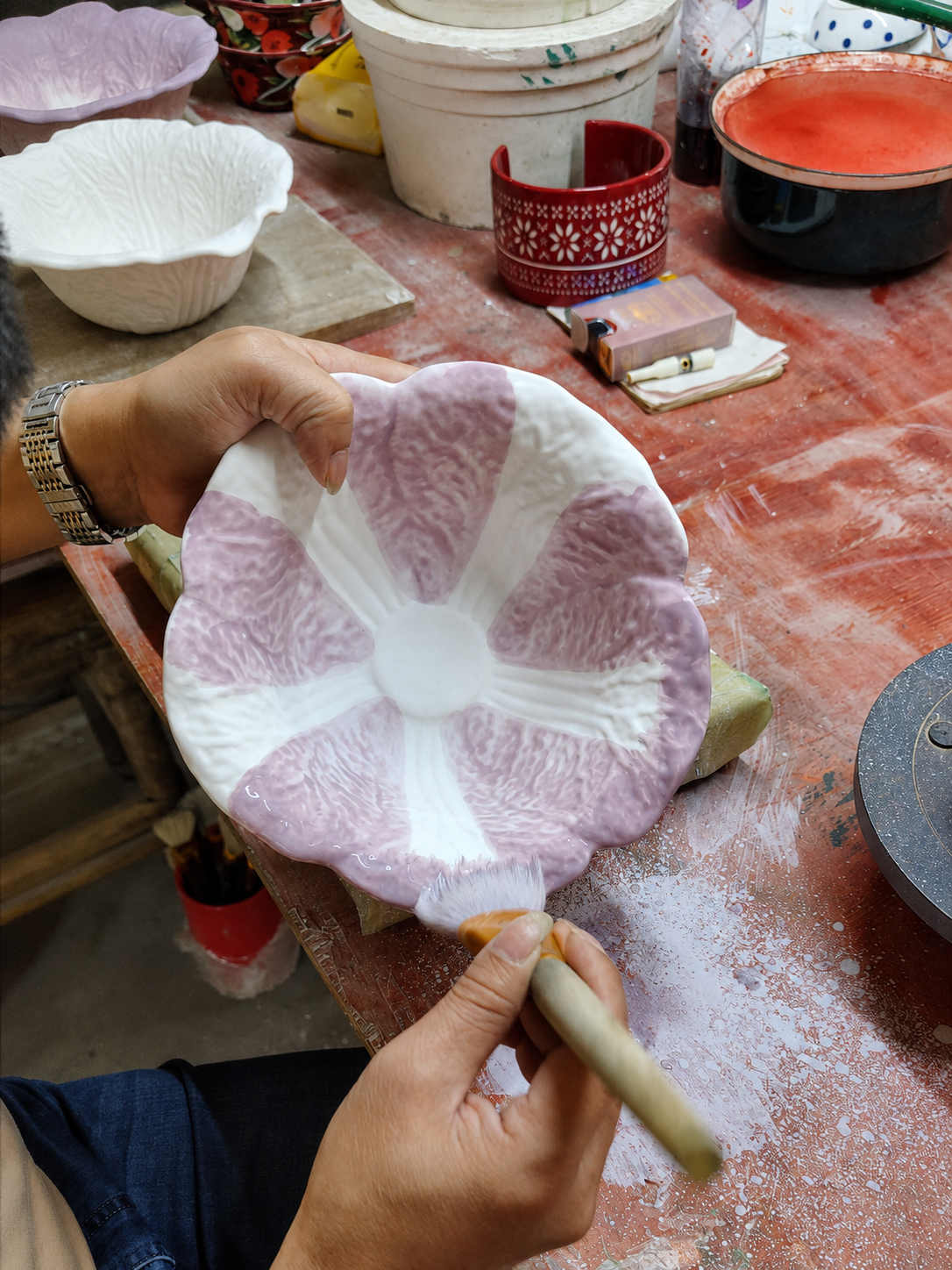
Pigment is only one part of the safety question
When people ask whether painted ceramic tableware is safe, they often focus only on the word “pigment.” A better question is where the decoration sits, how the glaze covers it, and whether the finished piece has been fired and tested under controlled conditions.
Ceramic decoration can be applied above, within or beneath the glaze system. These positions affect how directly the color layer meets food, washing, abrasion and repeated household use.
Why decoration beneath the glaze is different
In underglaze decoration, color is applied before the final glaze layer is fired. During firing, the glaze develops into a dense, glass-like surface over the decoration. The design is therefore not simply sitting on top where daily handling can reach it directly.
This structure can offer advantages for wear resistance and reduced direct contact, but it should never be treated as a guarantee by itself. Raw-material control, firing temperature, glaze condition and finished-product testing still matter.
What a responsible buyer should check
Look for clear information about the decoration method, intended use and care instructions. Inspect whether the glaze is smooth and continuous, especially around rims and food-contact areas. For products marketed for microwave, dishwasher or oven use, check the exact product guidance rather than assuming every ceramic piece behaves the same way.
At HongDian, we see safety as a complete production discipline: material selection, decoration position, firing management and final inspection must work together.