How Light and Setting Change the Way Ceramic Color Is Seen
Why a ceramic piece should be judged in a real setting, not only through a flat product image or an overly polished poster.
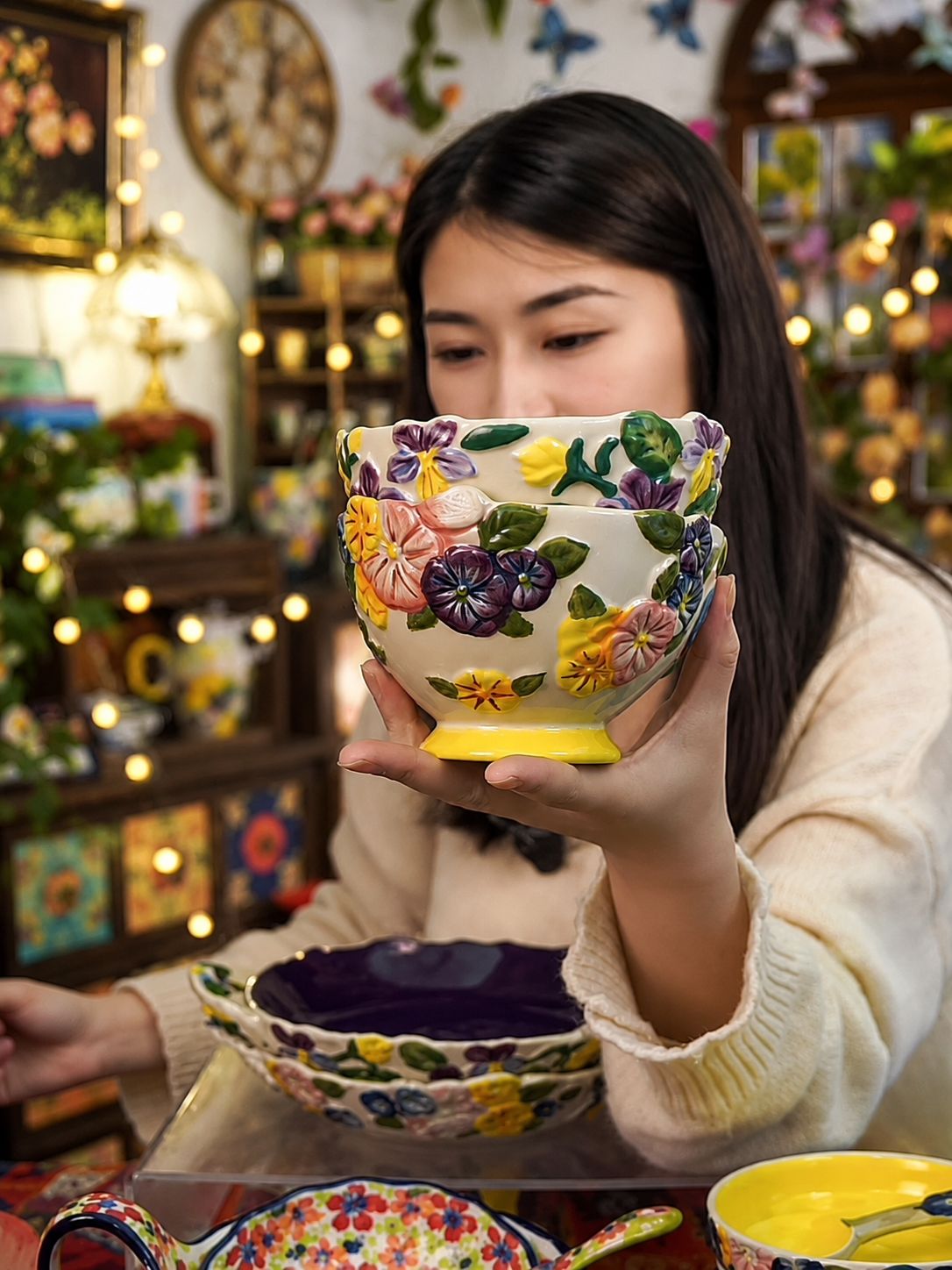
Ceramic color changes with its surroundings
Glaze reflects light. A floral bowl can feel soft beside natural wood, more vivid under a cool studio lamp, or quieter against a dark table. That does not mean the product itself has changed; it means color is always being read in relation to its surroundings.
For buyers, this is why a single isolated product image rarely tells the complete story. Scale, gloss, depth and the relationship between colors become clearer when the piece appears beside food, hands and familiar household materials.
Livestreaming can show more than a poster
A useful livestream scene should not hide the product under filters or theatrical decoration. The role of lighting is to make the glaze, relief and color relationship readable while keeping the object recognizable.
HongDian uses real pieces in styled but practical settings so viewers can compare proportions, see how the surface catches light and understand how the tableware may sit in an everyday home.
What to watch when viewing ceramics online
Look for more than one angle. Notice whether the color remains understandable when the presenter moves the piece. Compare the product beside a hand, plate or common object to judge scale. A trustworthy presentation should help you understand the object, not merely create a dramatic first impression.